AWS Weekly Roundup: Accelerating Cloud Infrastructure and Agentic AI Development

The cost of technological adoption is rarely found in the price of the new tool itself, but rather in the operational complexity of the transition. Moving legacy data structures, such as Hive tables, to modern frameworks like Apache Iceberg has historically required weeks of intensive engineering labor. However, recent developments from Amazon Web Services (AWS) are fundamentally altering this calculus. By streamlining managed migrations and introducing elastic, optimized runtimes for artificial intelligence agents, AWS is prioritizing seamless integration over disruptive overhauls. This week’s updates focus on enhancing developer velocity across data management, machine learning, and networking infrastructure.
Evolution of the Agentic Runtime
The most significant development for the machine learning community this week is the general availability of the new Amazon Bedrock AgentCore Runtime. As organizations scale their reliance on autonomous agents, cold-start latency and memory overhead have become critical bottlenecks. The new runtime architecture addresses these challenges through two primary technical innovations: memory elasticity and environment snapshotting.
Under the previous runtime model, agents frequently held onto peak memory allocations, even during periods of low activity. The new V2 runtime introduces a dynamic memory management system; sessions initiate with a minimal footprint, paging in resources on demand and releasing them as they go cold. This ensures that enterprises pay exclusively for the compute resources actually consumed during active execution.
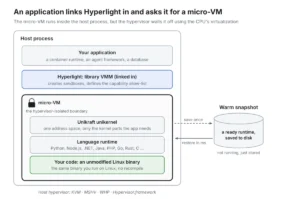
More importantly, the new runtime drastically reduces cold-start latency through snapshotting. By preparing the environment once and creating a persistent snapshot, AWS allows new instances to resume from a "warm" state. Internal performance testing conducted by the development team indicates that P75 cold-start times remain consistent at approximately two seconds for image sizes ranging from 200 MB to 2 GB. In contrast, the original runtime exhibited a performance degradation curve, with start times ballooning from 5.4 seconds to nearly 30 seconds as image sizes increased. While the per-unit rate for the V2 runtime is higher, the substantial reduction in total GB-hours utilized is expected to result in a lower overall cost for most agentic workloads.
Streamlining Data Migration to Apache Iceberg
Data engineering teams tasked with modernizing legacy analytics stacks have gained a significant tool this week: managed migration for Apache Hive tables to Apache Iceberg via Amazon S3 Tables. Historically, migrating large-scale data sets involved complex, manual pipelines that necessitated significant downtime.
The new AWS process simplifies this into a three-stage lifecycle: initialization, periodic synchronization, and final cutover. Crucially, the source remains writable throughout the entire migration process, with only a brief period of downtime required at the final cutover point. AWS Glue Data Catalog users can now initiate these migrations without provisioning additional compute or building bespoke pipelines. The system generates a comprehensive compatibility report for all objects in scope, ensuring data integrity before any movement occurs. This managed approach not only mitigates the risk of human error but also ensures that existing storage efficiencies, such as S3 Intelligent-Tiering, are maintained post-migration.
Enhancing DynamoDB and Bedrock Capabilities
The expansion of Amazon DynamoDB functionality represents a broader trend of integrating asynchronous, large-scale data handling into existing managed services. The introduction of bulk put item support allows developers to load line-delimited DynamoDB JSON or Amazon Ion files directly from S3 into existing tables.
This capability is designed for high-throughput data ingestion, with dedicated system capacity allocated to handle these operations. By offloading these writes to a managed, asynchronous job, AWS reduces the cost compared to standard per-request writes. For time-sensitive migrations, an "Accelerated" tier is available. Database benchmarks suggest that this service can ingest 100 million 1 KB items in under an hour, providing a scalable solution for bulk updates that was previously difficult to achieve without custom batching logic.

Simultaneously, the Amazon Bedrock ecosystem has expanded with the launch of "Web Answer." By allowing agents to perform synthesized, cited searches using a single tool call, AWS is abstracting the complexity of building retrieval-augmented generation (RAG) pipelines. Rather than forcing developers to manage search result ranking and synthesis manually, Web Answer automates parallel search execution and evidence gathering. This feature is currently available in the US East (N. Virginia) region and includes granular controls such as domain-specific allow/deny lists and publication date filtering, enabling more precise control over AI-generated outputs.
Advances in Compute and Networking Efficiency
On the compute front, AWS Lambda has introduced "Queue Mode" for self-managed Apache Kafka event sources. This update addresses the traditional limitations of Kafka consumer groups, which cap parallelism at the number of available partitions. By utilizing Kafka share groups, developers can now process records from a single partition across a significantly larger number of parallel Lambda invocations. This transition, however, requires a trade-off: users sacrifice strict record ordering in exchange for at-least-once delivery, necessitating that functions be written with idempotency in mind.
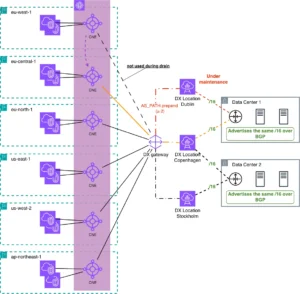
In the realm of networking, AWS has launched a preview of AWS Interconnect, a last-mile connectivity service developed in partnership with Equinix. This service enables private, managed connections between Equinix data centers and AWS without the need for manual router configuration or physical cross-connect coordination. By providing quad-redundant capacity across two locations and four links, the service offers a 99.99% availability SLA. This initiative is currently focused on the San Jose and Northern Virginia metropolitan areas, aiming to simplify the hybrid cloud footprint for enterprise clients.
Security and Operational Observability
Security Hub has also seen a critical update regarding Software Bill of Materials (SBOM) inventory. As supply chain security becomes a paramount concern, the ability to gain visibility into the software packages running across an organization’s entire footprint is essential. Security Hub now aggregates SBOM data from Amazon EC2 instances, ECR container images, and Lambda functions. This automated inventory allows security teams to identify the distribution of specific libraries across their environment instantaneously, a capability that is particularly valuable during the emergence of new vulnerabilities.
Broader Implications and Future Outlook
These updates, collectively, signal an shift in the AWS philosophy toward "in-place" optimization. Whether it is migrating legacy tables to Iceberg without stopping writes, or optimizing AI agent runtimes without refactoring the underlying code, the emphasis is clearly on reducing the friction of modernization.
The industry is currently preparing for the upcoming AWS re:Invent conference, scheduled for November 30 to December 4 in Las Vegas. The current pace of announcements suggests that the event will focus heavily on the maturation of agentic workflows and the simplification of enterprise-scale data migration. For organizations currently evaluating their cloud roadmaps, the focus should remain on adopting these managed, automated tools to reduce long-term maintenance debt.
As Julian Wood’s recent quarterly serverless recap highlights, the convergence of technologies like Lambda SnapStart, increased payload sizes, and elastic agent runtimes is creating a more modular and efficient serverless landscape. Furthermore, the contribution of AWS to the community MySQL project—specifically the binary log optimization for large transactions—underscores a commitment to improving the underlying performance of open-source technologies that underpin many of the world’s largest databases. By promoting these optimizations to the wider community, AWS not only improves its own RDS/Aurora offerings but also elevates the performance floor for all MySQL users, reinforcing its role as both a service provider and a key contributor to the broader software engineering ecosystem.
As the calendar turns toward year-end, these developments provide a roadmap for architects looking to enhance performance, reduce operational costs, and increase the agility of their cloud-native infrastructure. Builders are encouraged to monitor the official "What’s New with AWS" page and participate in the upcoming AWS Community Days to stay informed on the evolving landscape of these services.
Related posts: